
Self-Knowledge, Narrative, & Dostoevsky’s The Idiot, Part 1
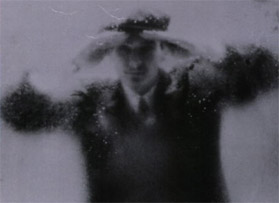


    “So, it would seem, then, you love this . . . young man?”
    “No-no-no! I can’t stand . . . your young man, I can’t stand him!” Aglaia suddenly boiled over and raised her head.  “And if you ever dare again, Papa . . . I’m serious; do you hear? I’m serious!”
     And she was serious indeed; she flushed all over and her eyes gleamed. Her father faltered and grew alarmed, but Lizaveta Prokofyevna gave him a sign behind Aglaia’s back, and he took it to mean: “Don’t ask questions.”
      . . . [a bit later] “Well, what’s the meaning of this? What do you think?” Ivan Fyodorovich uttered hastily.
     “I am afraid to even say aloud,”  Lizaveta Prokofyevna answered as hastily.    
     “But, in my view, it’s clear.”
     “And in my view, it’s clear.  Clear as day. She loves him.”
     “Not only loves; she’s in love with him!” echoed Alexandra . . .   (559-560).

In Dostoevsky’s The Idiot, routine social events and conventional loves and hates are depicted with an intimacy that reveals their life and death significance. The reader is pulled into the social situation to accept without question the cosmic importance of a dying young man’s bitterness or a young girl’s prideful and fickle attachments.

As I gave myself to this text I began to muse: is not this dabbling in a bit of vain anthropomorphism, at least from the point of view of the serious minded philosopher and scientist?  At the very least, these romantic, imaginative constructs of the poet do not help get us at the hard science of the human animal, do they?

But I was also reading, it so happened, another book: Strangers to Ourselves (2002), by Timothy Wison. T. Wilson admits that key points of his thesis are considered controversial. For example, his thesis regarding our inability to accurately introspect our own psychological states has received even more skepticism than his sympathy with Wegner’s (2002) wild thesis regarding the illusion of conscious will. This was of interest to me since I took both claims, mildly construed, to be persuasive, and this all without doubt pertained to the more serious issues of science and philosophy – as hard and bizarre as they might be to our comfortable folk conceptions. I was therefore struck – with a chuckle, considering the mild discomfort I felt over Dostoevsky’s anthropomorphic craft – by the seminal role that literature plays throughout T. Wilson’s Strangers to Ourselves. These ‘controversial’ claims are introduced, for example, in the very first two pages of the book through a discussion of Proust’s Remembrance of Things Past:

These words: ‘Mademoiselle Albertine has gone!’ had expressed themselves in my heart in the form of an anguish so keen that I would not be able to endure it for any length of time.  And so what I had supposed to mean nothing to me was the only thing in my whole life, How ignorant we are of ourselves.” 

T. Wilson goes on to talk about a friend, Susan, who thought she was in love with a man, only to realize a year later what her friends had known all along: that she had never been in love with this man.   T. Wilson then notes how Elizabeth, in Pride and Prejudice, could not “exactly define” her feelings for Mr. Darcy (2). Later, a short story by Mary Kierstead is cited (118), involving two cousins that come to realize that they had always hated Topper, a pony, even though they had been, for years growing up, “conned into loving him”. T. Wilson notes William Carpenter’s over a century old observation that young people often have “unnoticed” feelings, powerful attachments “between individuals of opposite sexes, without either being aware of the fact” (129).

T. Wilson admits that these stories are “just anecdotes” and appeals to the empirical evidence “for the idea that people can possess one feeling while believing they have another” (130).  But appeals to literature do not end. A short story by D. Eisenberg (150), and then one by Julian Barnes (163), are made useful.  In Barnes’ narrative, a man and a woman infer from a distance, based on cues given by others, their own love for one another, until their private personal narratives come in contact with a concrete meeting years later, at which time they to learned they did not even know one another (164). Proust is then analyzed further (169-170), and the book concludes with a personal narrative from Joan Didion (219-220).

Indeed, just yesterday evening down the Highway 101, John Perry appealed to an interesting story in answer to Paul Churchland’s question about how private thoughts might play a role-based way of managing information.

So: My tentative conclusion, based also on the continuing analysis of Melville’s The Whale and my more recent opening of Dickins’ A Tale of Two Cities, is this: The human psychology that novelists of 150 years ago took for granted cross-culturally – throwing the mysteries and complexities of the human mind up on stage to probe before a watching world – is now considered by American academics within philosophy, law, and psychology to be novel and controversial.  Given my continued interest – nay! my unfailing commitment as a soldier preparing for battle! – given my interest, I say, in metaphor and narrative, this tentative conclusion places a new shining edge on the old, largely failed battle ax of doing philosophy through literature – whatever this might be intended to mean, precisely.  Hats must be tipped to Martha Nussbaum’s Love’s Knowledge (Oxford, 1990) when noting such an idea, but with some reservation, given her courageous yet curious attempt at arriving at the necessary and sufficient conditions of an emotion in Upheavals of Thought (Cambridge, 2001); and one cannot forget her unblushing reference to ‘propositional content’ either. This result might have been inevitable though, at least after Nussbaum leaves aside Lakoff and Johnson’s revolution of embodied cognition and embraces an obscure and superficial substitute:

. . . we have at least a roughly demarcated category of phenomena before us that can be scrutinized to see what their common features might be, although we should be prepared, as well, to find that the boundaries of the class are not clear and that there are noncentral cases that share only some of the features of the central cases (24).

To my delight, I find something importantly different with T. Wilson, who crucially employees the word ‘narrative’ without trepidation or theoretical baggage when addressing the relation between the conscious and unconscious mind.  One cannot help but think of Lakoff and Johnson’s objectivism while reading T. Wilson’s concluding discussion – surprisingly simple and philosophically cogent – of narrative and truth (216-218).   T. Wilson’s success is found, I think, in the ability to self-consciously approach ‘personal narrative’ as an important analogy (162), and he notes that the “narrative viewpoint is perfectly compatible with the archaeology metaphor” [my emphasis].  T. Wilson makes no reference to Lakoff and Johnson. However, an entire chapter of Metaphors We Live By (1980) is dedicated to these sorts of ‘Complex Coherence across Metaphors’ (97-105), and the last chapter of Metaphors We Live By (four pages before the end of the book) foreshadows T. Wilson’s over-arching thesis:

But any really deep understanding of why we do what we do, feel what we feel, change as we can change, and even believe what we believe, takes us beyond ourselves . . . it comes out of our constant interactions with our physical, cultural, and interpersonal environment . . . The process of self-understanding is the continual development of new life stories for yourself (232-233) [emphasis mine].

 And so now I see another error in my thinking that crystallized about five years ago: Nicholas Maxwell led me astray by pitting literature against science according to the tension between the human world and the physical word, consciousness and matter.  But literature is a powerful tool in understanding the unconscious mind as well as the conscious; we perhaps have much to learn from the novelists of 150 years ago who wrestled with the physical complexities of being human despite the availability of a comfortable, conficting narrative of the Cartesian theatre. 

______

I will soon provide a ‘Part 2′ entry as follow up to these considerations, which will consist of an analysis of Part Four of Dostoevsky’s The Idiot.  I will offer mild disagreement with Joseph Frank’s (1997) interpretation of the changes in Part Four’s narration perspective and suggest that Frank overlooks Dostoevsky’s sophisticated psychology on display, particularly those features of the human animal now understood as novel, controversial scientific discoveries. 

Share and Enjoy:
  • Digg
  • Sphinn
  • del.icio.us
  • Facebook
  • Mixx
  • Google Bookmarks
  • email
  • Print
  • StumbleUpon

The New Enlightenment, Part 11: 2003 Edition of Metaphors We Live By


george_lakoff bwThe New Enlightenment, I will so far continue to assert, is represented well by a blend of Christopher Hitchens, Daniel Dennett, and George Lakoff. You know enough about Hitchens for my purposes here, but I call your attention to the book Dennett published in 2003 titled Freedom Evolves. Trying to undo his life of sins and blasphemy, Dennett is now pretending that he has all along been for moderation, morality, free-will, the arts, and consciousness. Or maybe not. Dennett evidently has been for all these things, as suppored by citations from Dennett’s work over the last 30 years.

George Lakoff is in a similar but worse predicament. During my interdisciplinary research in 2005 and 2006, the literature I was exposed to took a largely disparaging view of conceptual metaphor, and so I did not read the original work by Lakoff & Johnson, which was regularly, albeit insufficiently, summarized by others. I have learned that this shortcut was a mistake. It is a shame I did not read Women, Fire, and Dangerous Things (1987) many years ago, a thought that recently motivated me to pick up my still unread copy of Lakoff’s and Johnson’s three decade old Metaphors We Live By (1980, 2003). I went right for the material at the back of the book (‘Afterward, 2003′) hoping for some attempted explanation for academia’s commitment to old and empirically unhelpful ideas. Here is the result of this 40 second research project, the conclusion of the 2003 new edition:

The Present Situation

In spite of the massive and growing evidence for them, our basic claims have nonetheless met resistance for an obvious reason: they are inconsistent with assumptions that many people in the academic world and elsewhere first learned and that shaped the research agenda they still pursue. Many mainstream philosophers, linguists, and psychologists either have vehemently denied these claims or have preferred to ignore them and to go about their ordinary business as if the claims were false. The reason is clear – our claims strike at the heart of centuries-old assumptions about the nature of meaning, thought, and language. If the new empirical results are taken seriously, then people throughout our culture have to rethink some of their most cherished beliefs about what science and philosophy are and reconsider their values from a new perspective.

Above all, the key sticking point is the existence of conceptual metaphor. If conceptual metaphors are real, then all literalists and objectivist views of meaning and knowledge are false. We can no longer pretend to build an account of concepts and knowledge on objective, literal foundations. This constitutes a profound challenge to many of the traditional ways of thinking about what it means to be human, and about how the mind works, and about our nature as social and cultural creatures.

At the same time, what we have discovered is fundamentally at odds with certain key tenets of postmodernist thought, especially those that claim that meaning is ungrounded and simply an arbitrary cultural construction. What has been discovered about primary metaphor, for example, simply does not bear this out. There appear to be both universal metaphors and cultural variation.

For these reasons, this book remains just as controversial and radical today as when it first appeared. It calls into question business as usual and requires new collaborative cross-disciplinary methods of inquiry.

If you are interested in engaging in such an inquiry, the following references provide a place to start. . . .

UCSD’s Seana Coulson (find link to the right) and Rafael Nunez  are not necessarily “a place to start”, I suppose, so it is perhaps not a surprise that they are not listed in the short reference list that follows this new afterward – although the inclusion of Coulson’s Semantic Leaps (Cambridge 2001) might have been fitting. However, UCSD’s Gilles Fauconnier  and Ronald Langacker  are listed.

Also listed:
Lera Boroditsky  (Stanford), see Newsweek on Boroditsky
Fernandez-Duque  (Villanova University)
Charles Fillmore  (UC Berkley)
Raymond Gibbs   (UC Santa Cruz, PhD UCSD)
Adele Eva Goldberg   (Princeton, previously UCSD)
Grady, C (?)
Mark Johnson  (U of Oregon)
Zoltan Kovecses (?)
David McNeill (U of Chicago)
Srini Narayanan  (UC Berkley)
Terry Regier   (U of Chicago)
Eve Sweetser (UC Berkley)
Leonard Talmy  (U at Buffalo, NY; PhD UC Berkeley)
S. Taub (?)
Mark Turner   (Case Western Reserve University, Ohio; lived in San Diego)
Stephen Winter (Wayne State University Law School, Detroit).

Thus, the intractability of the situational enviroment 30 years ago looks much the same in “the present situation”. This is a situationist insight illustrated, however ironically, by the most recent entry  at Harvard Law’s The Situationist. Marc Hauser  proposes a Chomsky-ish universal grammar-like mechanism of computation that precedes emotion, and presumably, embodied semantics, during the formulation of a moral judgment. And yet the simple experiments Hauser provided seem to be better predicted by embodied prototype effects, a basic thesis of Women, Fire, and Dangerous Things (1987). So I offered the following comment:

I do not think Chomsky has proven to be a serviceable heuristic, particularly here. Development within the mind sciences also has little use for static propositional content held within the unconscious mind and so I am likewise not hopeful that talk of a non-semantic calculus and unconscious principles that drive conscious judgment is going to be of much help in interpreting basic experimental data. Rather, I think Hauser’s experiments on double effect, in keeping with Lakoff (1987), reveal asymmetric prototype effects, where causing harm through direct physical causality is the central case.

Michael Metzler
www.poohsthink.com

Share and Enjoy:
  • Digg
  • Sphinn
  • del.icio.us
  • Facebook
  • Mixx
  • Google Bookmarks
  • email
  • Print
  • StumbleUpon

The New Enlightenment


mind-science

Athens
The rise of the University
The Renaissance
The Enlightenment
The rise of the sciences in the 20th century.

And now . . .

The New Enlightenment:  

a progressive, interdisciplinary demeanor that weds the emerging mind sciences, meta-critical philosophy, the arts, and the work of the public intellectual. [my take so far anyway]

Explanation of terms:

“The New Enlightenment” I take from George Lakoff (The Political Mind, 2008).  I was struck by the appropriateness of this phrase in light of Christopher Hitchens’ call to a New Enlightenment just a year previous (God is not great, 2007). Somewhere between Hitchens’ calling the 18th century philosophers to a second, more dedicated baptism and Lakoff’s pronouncement of the “Father, Son, and Holy Ghost,” a new age had dawned.

Only history can determine the accuracy of this suggestion, of course, but there is a sense in which we can now begin running the history – consider the birth and death of ‘postmodernism’. Further, I was motivated to write this entry only after scanning the recent work of some philosophers that I had hoped would convey  the marks of The New Enlightenment. To my disappointment they did not. As Lakoff pointed out with what I take to be some insight, we are “now in the stage described by Thomas Kuhn in which the new and old paradigms coexist with little interaction” (243). 

“Interdisciplinary” refers to genuine use of models from different fields, such as linguistics, cognitive science, neurobiology, developmental, psychology, philosophy, mathematical modeling, biology, and literature. For example, the philosopher Samuel Guttenplan (Objects of Metaphor, 2005) should consider whether his armchair investigation of metaphor holds up to implications of how qualitatively similar N400 ERP components [this has to do with 'brain waves'] vary in amplitude in proportion to stimuli’s metaphoricity (see Seana Coulson & Cyma Petten, A special role for the right hemisphere in metaphor comprehension?’, Brain Research, 2007; also see Coulson, ‘Metaphor Comprehension and the Brain’, in Gibb’s The Cambridge Handbook of Metaphor and Thought, 2008).  Likewise, Lakoff should consider the history of our modeling of the circadian, neuronal mechanism of the fruit fly (Bechtel and Abrahamsen, ‘Dynamic Mechanistic Explanation: Computational Modeling of Circadian Rhythms as an Exemplar for Cognitive Science’,  to appear in Studies in History and Philosophy of Science Part A) before pronouncing our knowledge of cognitive mechanisms realized by millions of neurons in the human brain.  Similarly, “Philosophy of . . . ” sub-disciplines must be empirically guided by the developing mind sciences to every extent possible, in particular the philosophy of science, philosophy of law, and political theory.  Take for example the successes of Situationism at Harvard Law and the counter-balancing neurobiological considerations of Suhler and Patricia Churchland (‘Control: conscious and otherwise’, Trends in Cognitive Sciences, 13(8), 341-347, 2009).

“Demeanor” reflects the lack of a movement, institution, or single ideological position capable of rhetorically herding thinkers. This is a new plateau for cosmopolitan civilization, not a new creed or empire. Likewise, “meta-critical philosophy” refers to our ability to begin locating the unconscious ways we are guided by the inescapable semantic framing provoked by language, which allows philosophy itself to become more conscious of the metaphors that constrain it. I have been saying for a decade – to what seemed to be no good purpose – that the abstract propositions contained within or floating above our utterances and the static content residing in our belief boxes are simplifying illusions of our philosophical imagination.  Propositions, concepts, and content, traditionally understood, do not exist. Period. End of story. If you think this is not the end of the story, I invite you to my comment section, or anyone’s comment section. Please, get creative and find a way to make a peep. So far, you continue to hold your tongue once so challenged. As I think is evident after any random perusal of how philosophers and non-philosophers persist in talking, this linguistic corollary to atheism just is the necessary step that must be made in order to advance within The New Enlightenment (you are free to remain within your academic or literal cult; I wish to make no strict demand on you here. I am only describing how it is that you will forego the self-critical, cosmopolitan advance to be found in the interdisciplinary work of The New Enlightenment).

As for the social and the political: The New Enlightenment is, at least roughly, a return to the founding of our democracy without the Old Enlightenment notions of reason. Empathy, embodiment, nurture, freedom of inquiry, and inclusion trump “authoritarian hierarchy based on vast concentrations and control of wealth; order based on fear, intimidation, and obedience . . no balance of power; priorities shifted from the public sector to the corporate and military sectors . . . and patriarchal family values projected on religion, politics, and the market” (Lakoff, 1).

* The picture is the web-page header for the #1   graduate program in Neursciences in the U.S., at the University of California, San Diego.

___________________

UPATE: And speaking of Metaphor, Harvard Law’s The Situationist notes a recent article in the Boston Globe (by Globe staff Drake Bennett) relating the prolific and forward moving research on conceptual metaphor.  Also, a video of George Lakoff’s talk on the political mind, at UC San Diego, is now up.

___________________

Share and Enjoy:
  • Digg
  • Sphinn
  • del.icio.us
  • Facebook
  • Mixx
  • Google Bookmarks
  • email
  • Print
  • StumbleUpon

Faith & Reason, Part 3: The Nature of Metaphor


jesus-with-sheepNote: I altered some of this entry after studying conceptual metaphor more this summer.

_______


In the hopes of locating a tension between faith and reason by means of armchair philosophy I first explored the subject of Belief. I found nothing to be of help – just the opposite. Now I turn to Metaphor.   


Appreciation has been growing for the metaphorical-like way we grasp one knowledge domain in terms of another very disparate knowledge domain; a corollary to this is the growing appreciation for what we are more familiar with: linguistic metaphor, such as ‘Juliet is the Sun’ or the first time someone said ‘take a hike’.


See for example:

Gibbs, Raymond (2006), ‘Metaphor Interpretation as Embodied Simulation’, Mind & Language, 21:3, pp. 434-58.  Sopory, Pradeep (2005), ‘Metaphor and Affect’, Poetics Today 26:3, pp. 433-58. Hogan, Patrick (2002), ‘A Minimal, Lexicalist/Constituent Transfer Account of Metaphor’,  Style, 36:3, pp. 484-502.  (2003a), The Mind and Its Stories. Cambridge University Press. (2003b), Cognitive Science, Literature, and the Arts: A Guide for Humanists (Routledge).   Johnson, Mark and George Lakoff (1999), Philosophy In The Flesh (Perseus Books Group). Ritchie, David (2003), ‘ARGUMENT IS WAR—Or is it a Game of Chess? Multiple Meanings in the Analysis of Implicit Metaphors’, Metaphor and Symbol, 18:2, pp. 125-46. (2004), ‘Common Ground in Metaphor Theory: Continuing the Conversation’, Metaphor and Symbol,  19:3, 233-44. Guttenplan, Samuel (2005), Objects of Metaphor (Oxford University Press).


Novel metaphor is ubiquitous in natural language, and in fact appears necessary for understanding objects of science and our own unconscious mind. This is in part because metaphor allows us to understand something ‘not seen’ according to a domain we have a good deal of experiential knowledge of. More generally, though, this just seems to be a basic way in which our mind ‘maps’ any new domain of experience onto existing domains of knowledge.  To make a metaphor out of linguistic ‘metaphor’, we could say that at root we know the world and ourselves metaphorically.


Metaphor is the predominate language of religion – once thought a liability, this fact may now be considered a strength. Just as the non-Christian and Christian know that in the same way – a fact well conceded by Plantinga’s popular conceptual analysis – the non-Christian and Christian also know metaphorically in the same way. There is no distinction in cognitive understanding between grasping the sage’s claim that ‘God is a rock’ and the philosopher’s claim that the unconscious mind locates, tracks, and identifies objects. 


Something further follows: Sage, philosopher, and scientist are all free to engage in a form of understanding that does not permit matter of fact yes or no answers.  Metaphor is not the sort of thing that is precisely true or false, but rather more or less apt; (more…)

Share and Enjoy:
  • Digg
  • Sphinn
  • del.icio.us
  • Facebook
  • Mixx
  • Google Bookmarks
  • email
  • Print
  • StumbleUpon